5 Hair Straighteners Robbing You Blind (And 5 Actually Worth It)
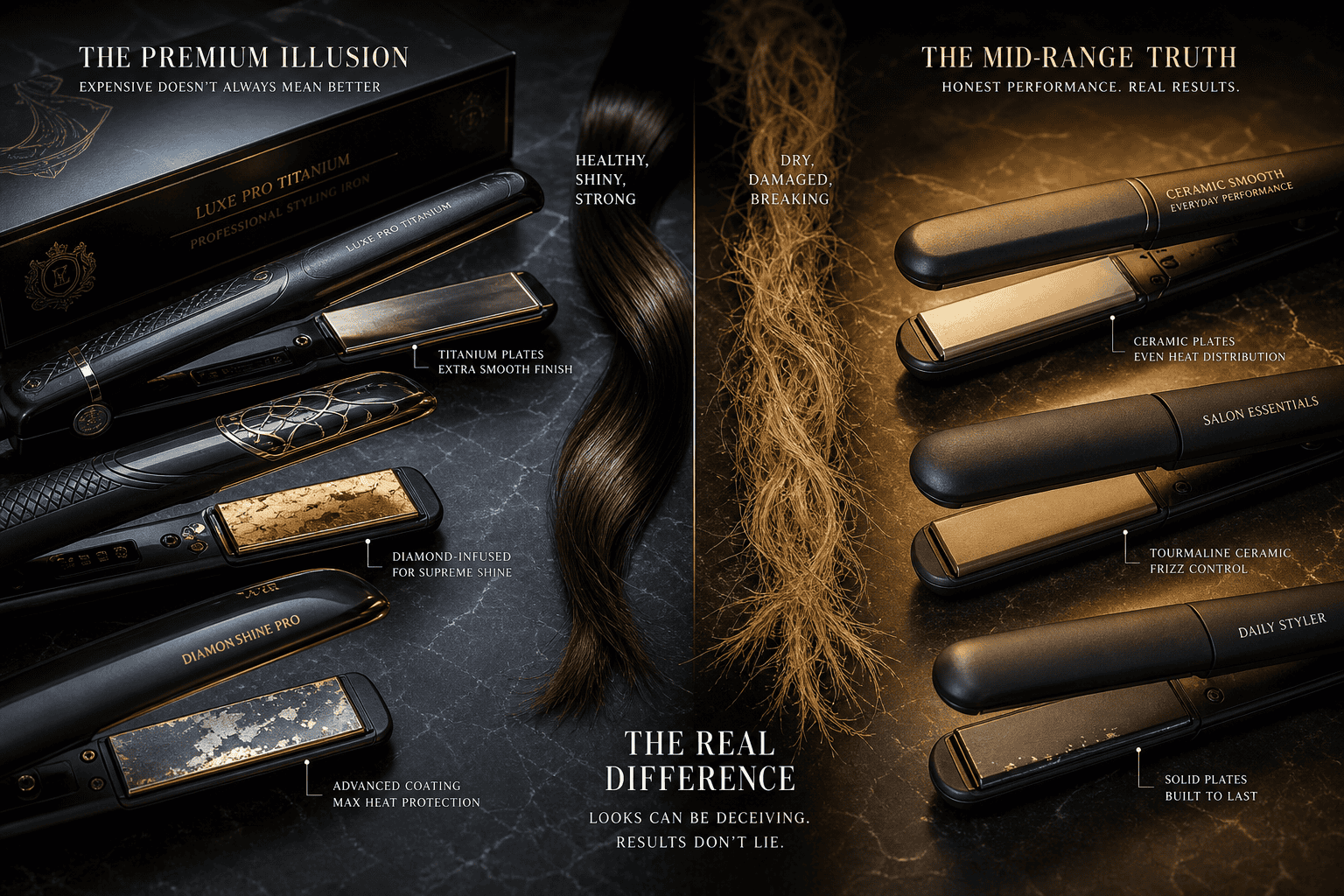
You’re about to spend somewhere between $40 and $500 on a straightener. Here’s the part that should worry you: the $40 one and the $500 one can do almost the same thing to your hair — or the cheap one can quietly wreck it. The price tag isn’t what decides that. One spec does, and it stays off the box on purpose.
What actually determines whether an iron damages your hair
A straightener is two hot plates and a thermostat. Whether your hair comes out glossy or snapping comes down to two things:
- What the plates are made of all the way through — not what’s sprayed on top.
- Whether it holds a steady temperature instead of swinging every time it contacts hair.
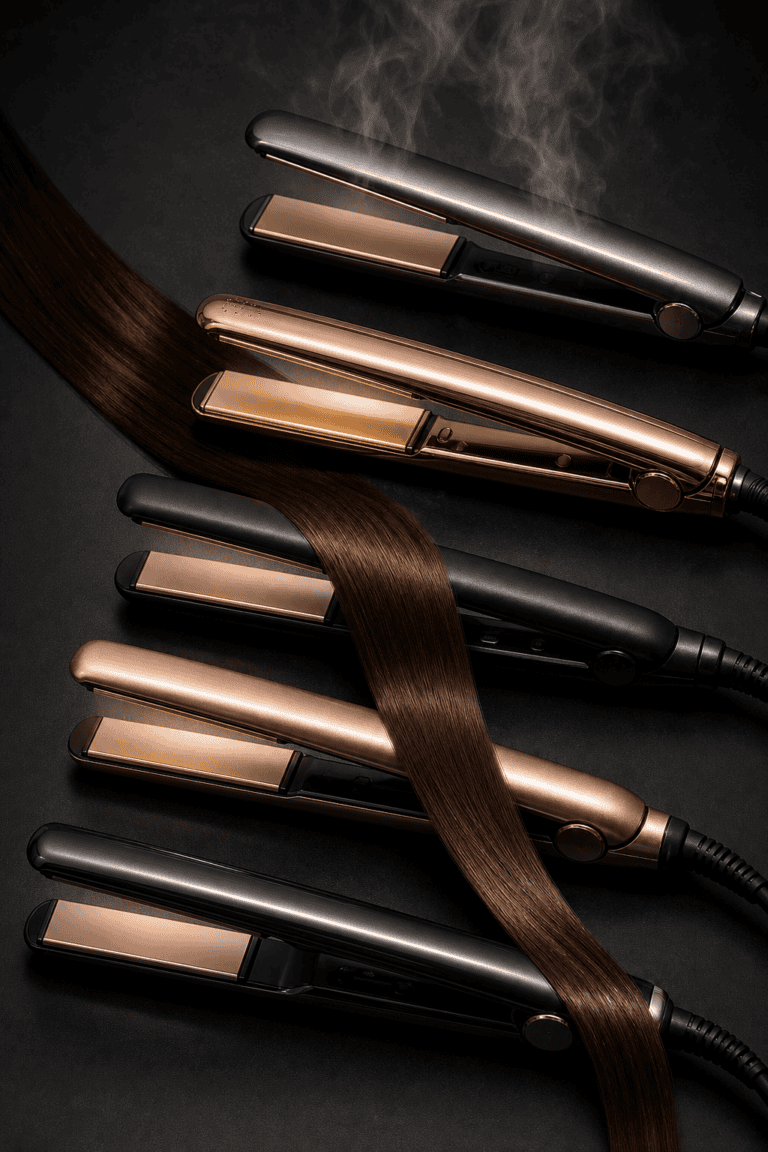
That first point is where the marketing lies to you. Plenty of cheap irons advertise ceramic or tourmaline plates. They’re not solid ceramic. They’re cheap metal with a thin coating sprayed over the top. Give it a few months and that coating wears through, bare metal gets exposed, and hot spots form. The iron that felt great in the store starts scorching a stripe of hair on every pass — and you won’t notice until your ends break off.
Forget what’s printed on the box. It’s what’s underneath that explains this entire list.
The five robbing you blind
1. Dyson Corrale — around $500
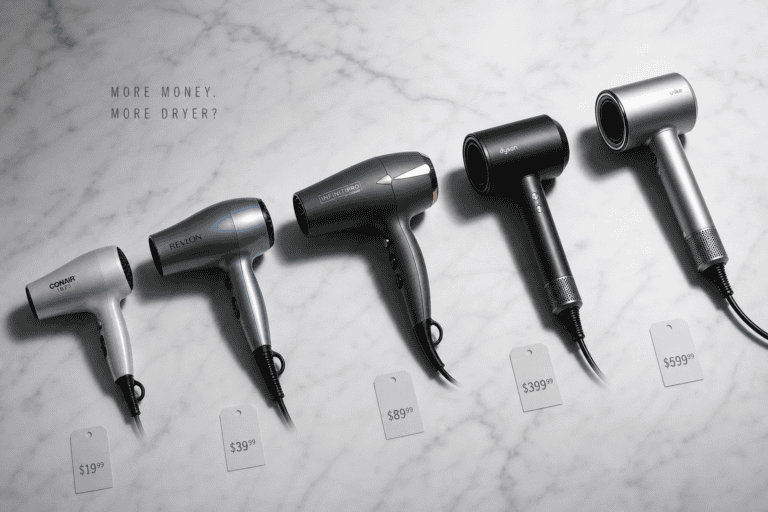
The engineering is real: flexing manganese copper plates that bend around the hair, and a sensor adjusting temperature 100 times per second. But you’re paying roughly $400 extra for hair that ends up looking the same. Buyers report snagging on thicker hair, noticeable weight, and only three heat settings. You’re paying for a battery and a beautiful box — the same premium-positioning play we unpacked in You’re Paying $400 For A Hair Dryer Built To Look Expensive.
2. GHD Platinum+ — $249
Fifty beauty awards and a sensor reading temperature 250 times per second. Here’s what gets skated past: the iron is locked to a single temperature of 365°F. You can’t turn it up for thick, coarse hair or down for fine, colour-treated hair. They chose the temperature for you, charged $249, and marketed the missing dial as a feature.
3. T3 Lucea — around $200
It straightens perfectly well, but testers keep catching the same flaw: the wide plates get clumsy exactly where precision matters, around the face and the nape. You’re paying up for the name, and $80 irons match it where people actually look.
4. Bio Ionic 10X — around $200
Two hundred dollars for plates that vibrate. That’s the pitch. It sounds like science, but a steady plate at the right temperature delivers the same smooth pass without the gimmick.
5. The drugstore “ceramic tourmaline” trap — $20–$40
This one hides at the bottom of the price range instead of the top. These are the coated metal plates described above. Fine for a month, then the coating wears, hot spots appear, and it cooks your hair one pass at a time. Going cheap didn’t save you anything — it cost you your ends.
The five actually worth your money
1. BaBylissPRO Nano Titanium — around $100
The iron salons actually reach for. Solid titanium plates, not coated, that heat fast and hold temperature under load. Floating plates mean fewer passes. It climbs to 450°F for thick, coarse or coily hair that premium irons often can’t get hot enough for. One caution: some models don’t auto shut off, so unplug it.
2. CHI G2 Titanium-Infused Ceramic — under $100
Floating plates that cut snagging, plus genuine digital control from 260°F to 450°F. That adjustable range is precisely the feature GHD charges $249 to leave out.
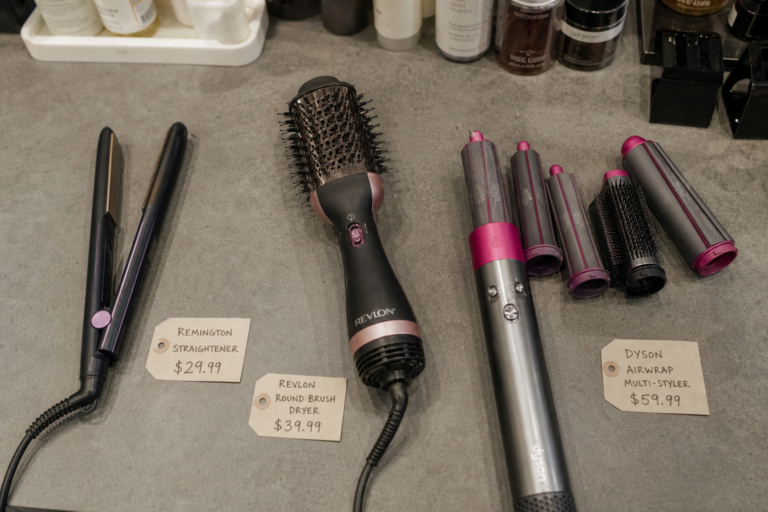
3. Remington — $30–$40
How to go cheap the right way. If you straighten once or twice a week rather than daily, it delivers a genuinely good result. It’s the honest version of what the coated drugstore irons were pretending to be.
4. CHI Original Ceramic — around $100
One reason above all others: longevity. Owners report these running ten years and beyond. Solid ceramic gives even, gentle heat with fewer hot spots — the safe pick for fine, damaged or colour-treated hair.
5. NITION Professional — around $40
The sleeper. Testers found it glides as smoothly as irons costing far more, the plates deliver even heat, and it doubles as a curling iron. If you want maximum result per dollar on this list, start here.
Where the money actually stops working
Everything that genuinely protects your hair — solid plates, a temperature you control, heat matched to your hair type — lives around $80 to $100. Everything above that is real engineering wrapped in marketing and a badge tax. Everything at the very bottom is the trap that wrecks your hair to save twenty dollars.
The smart money isn’t at the top and it isn’t at the bottom. It’s in the honest middle. If you want the specific budget picks that clear the plate-construction bar, we ranked them separately in 5 Cheap Hair Straighteners Everyone Ignores.
Related reading
- 5 Cheap Hair Straighteners Everyone Ignores (But They’re Goldmines) — the budget irons that actually hold up
- These 6 Hair Tool Brands Are All The Same Company — the brands sharing one parent company
- The 5 Levels Of Hair Dryers (And Where The Price Stops Mattering) — the same analysis applied to dryers
- 5 Hair Tool Brands Actually Worth Your Money
Sources
- Manufacturer specifications and published retail listings (Dyson, GHD, T3, Bio Ionic, BaBylissPRO, CHI, Remington, NITION)
- Independent tester commentary on plate construction and heat consistency
- Aggregated verified customer reviews from major retail platforms
- Comparative retail pricing at time of writing
Prices fluctuate. Figures reflect typical retail ranges at time of writing.