The 5 Levels Of Hair Dryers (And Where The Price Stops Mattering)
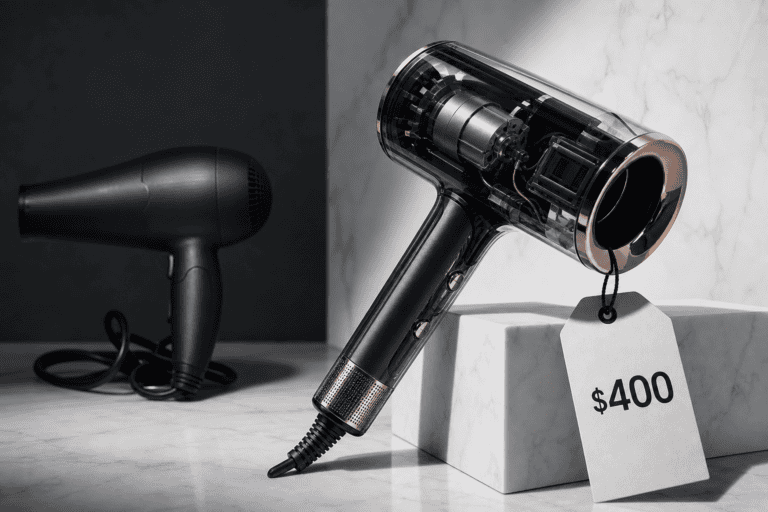
The hair dryer industry has been running the same play for decades: mark up motors that cost very little to make, add buzzwords like tourmaline infusion and ionic technology, and hope you never work out that the jump from a $150 dryer to a $400 dryer buys you almost nothing your hair can feel.
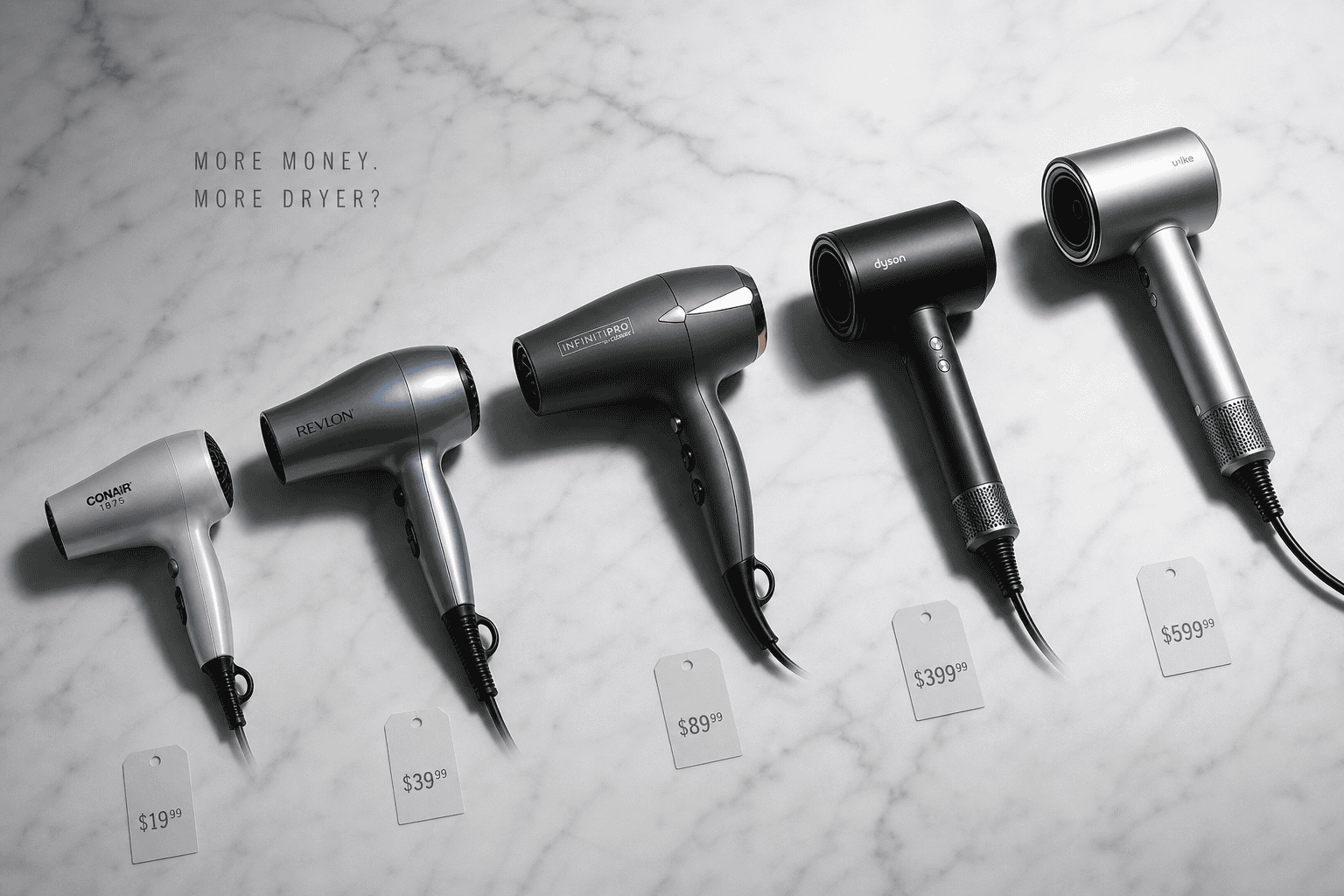
Here are all five tiers, from the bargain bin to $800 machines — and where the price genuinely stops mattering.
Level 5: $15–$35 — better than it has any right to be
The name you keep running into is Conair. The InfinitiPro SmoothWrap pushes 1,875 watts with ionic ceramic tech at $28–$38. Under $40 for technology that a decade ago only existed above $200.
Consumer Reports put fourteen dryers through testing and Conair landed among the highest performance ratings, alongside brands costing four and five times more. For frizz-prone or curly hair, the Revlon Infrared in this same range edges it out with infrared heat distribution.
Why it’s overlooked: people assume price reflects performance. Here that assumption is simply wrong — there’s probably one in your bathroom drawer outperforming what you paid.
Level 4: $35–$80 — where professional features started leaking down
The Conair InfinitiPro titanium ceramic lives here, as does the Revlon Infrared Ionic, with cool-shot buttons, nozzles, diffusers and real heat control.
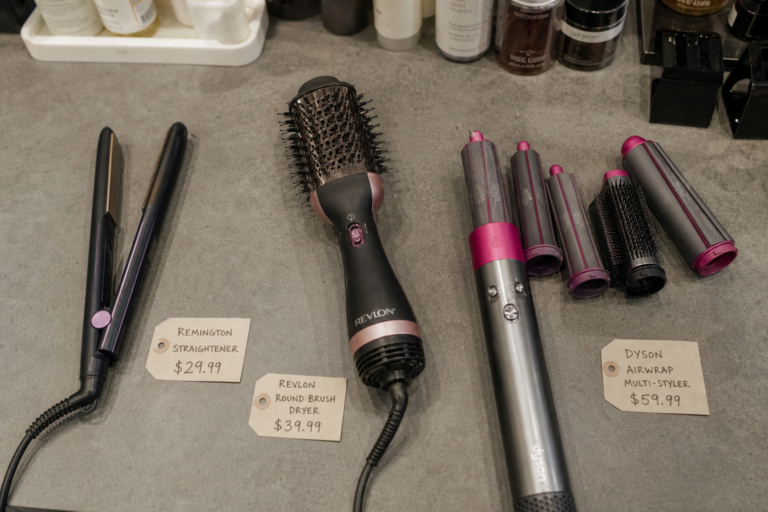
One hairstylist ran a sub-$50 dryer directly against a Dyson and admitted the results surprised her — the gap far smaller than expected. The BaBylissPRO Nano Titanium Bambino also sits around $35, a compact 1,000-watt travel dryer punching above its weight.
What to look for: at least 1,500 watts, ceramic elements, and three heat settings. That’s your floor for daily use without heat damage.
Why it’s overlooked: the packaging looks identical to the ultra-budget shelf below it.
Level 3: $100–$200 — the tier that closed the gap
One name dominates: the Shark SpeedStyle Pro Flex. Listed at $250, frequently sitting around $149, and engineered explicitly to go after the Dyson Supersonic.
A temperature sensor regulates heat 1,000 times per second to keep airflow below 230°F, and a Scalp Shield mode drops it to 122°F for safe root drying. A thousand heat checks every second.
The SpeedStyle hits most of the same notes as dryers costing two and three times more. If you’ve been eyeing a Dyson but can’t justify $400, this is the entry point into professional-tier drying without the luxury markup. Shark’s curly-hair sibling, the SpeedStyle RapidGloss, made our list of 5 Hair Dryers Worth The Money For Thick, Curly Hair.
Why it’s overlooked: Shark made its name in vacuums, not beauty.
Level 2: $200–$400 — genuine engineering, real diminishing returns
Owned by the GHD Helios: 1,875 watts, a brushless motor built for salon-length days, tuned for consistent even heat so the cuticle lays flat.
The Dyson Supersonic also lives here — the original, launched in 2016 after four years of development, roughly 600 prototypes and around $71 million in research. Its V9 digital motor spins at 110,000 RPM and was given thirteen impeller blades specifically to push its tone above the range of human hearing. It measures air temperature 40 times per second to prevent damage. That’s aerospace-grade engineering applied to hair care.
This tier earns its price if you dry daily or have thick, textured hair. For the full breakdown of what that $400 actually buys, see You’re Paying $400 For A Hair Dryer Built To Look Expensive.
Why it’s overlooked: the mid-range below it has closed the gap so dramatically that most people can’t feel the difference.
Level 1: $400–$800 — where you’re buying the last five percent
Two machines define it.
The Dyson Supersonic r reached consumers in early 2025 — the smallest and lightest Supersonic yet, weighing about 0.7 lb.
The L’Oréal AirLight Pro at $475 uses infrared light, the same wavelength used in dermatology clinics, to dry hair from the inside out. In testing it averaged six minutes from soaking wet to fully dry on long, medium-thick hair that previously took fifteen to twenty. Stylist Evanie Frausto used it on Sabrina Carpenter at the 2025 Grammy Awards.
The Dyson Supersonic Nural adds a time-of-flight sensor for scalp protection at just under $800.
But as beauty editor Lisa Fennessy put it: if anyone tells you that you need a $400 hair dryer, they’re lying to you and to themselves. Some stylists have also reported AirLight Pro units failing after about a year.
Why it’s misjudged: in the opposite direction. People assume the price means it’s best for everyone, when the tier below — and even two tiers below — delivers ninety-plus out of a hundred for a fraction of the cost.
The receipts
The hair dryer industry has a performance ceiling, and it’s a lot lower than the price tags suggest. Real gains stop somewhere around the $150 mark. Everything above that is refinement, weight reduction, and brand.
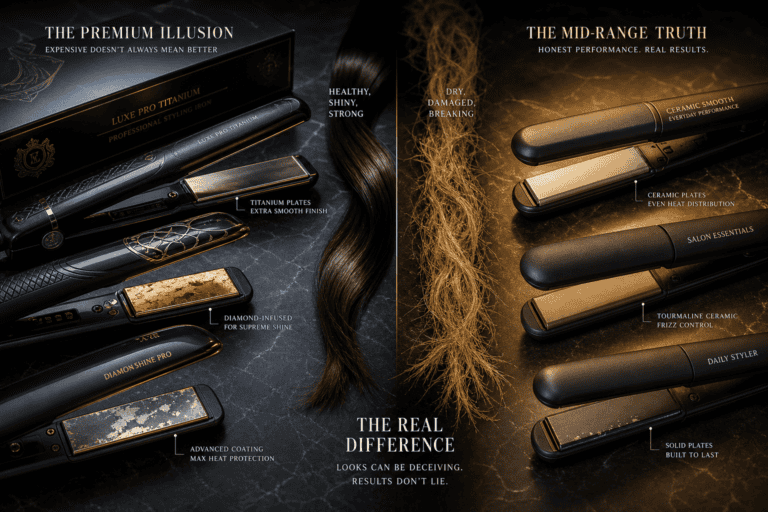
The same ladder logic runs through straighteners too — we mapped that in 5 Hair Straighteners Robbing You Blind.
Sometimes the best hair dryer isn’t behind the highest price tag. Sometimes it’s the one the engineers quietly perfected three tiers down.
Related reading
- You’re Paying $400 For A Hair Dryer Built To Look Expensive — the margin story behind the Dyson Supersonic
- 5 Hair Dryers Worth The Money For Thick, Curly Hair
- 5 Hair Straighteners Robbing You Blind (And 5 Actually Worth It)
- These 6 Hair Tool Brands Are All The Same Company
Sources
- Consumer Reports — comparative hair dryer performance testing
- Manufacturer specifications and published retail listings (Conair, Revlon, BaBylissPRO, Shark, GHD, Dyson, L’Oréal)
- Dyson published R&D disclosures — development timeline, prototype count, motor specifications
- Professional stylist and beauty editor commentary (Evanie Frausto, Lisa Fennessy)
- Reported durability issues from stylists using the L’Oréal AirLight Pro
- Comparative retail pricing at time of writing
Prices fluctuate, and mid-tier dryers in particular are frequently discounted well below list. Figures reflect typical ranges at time of writing.