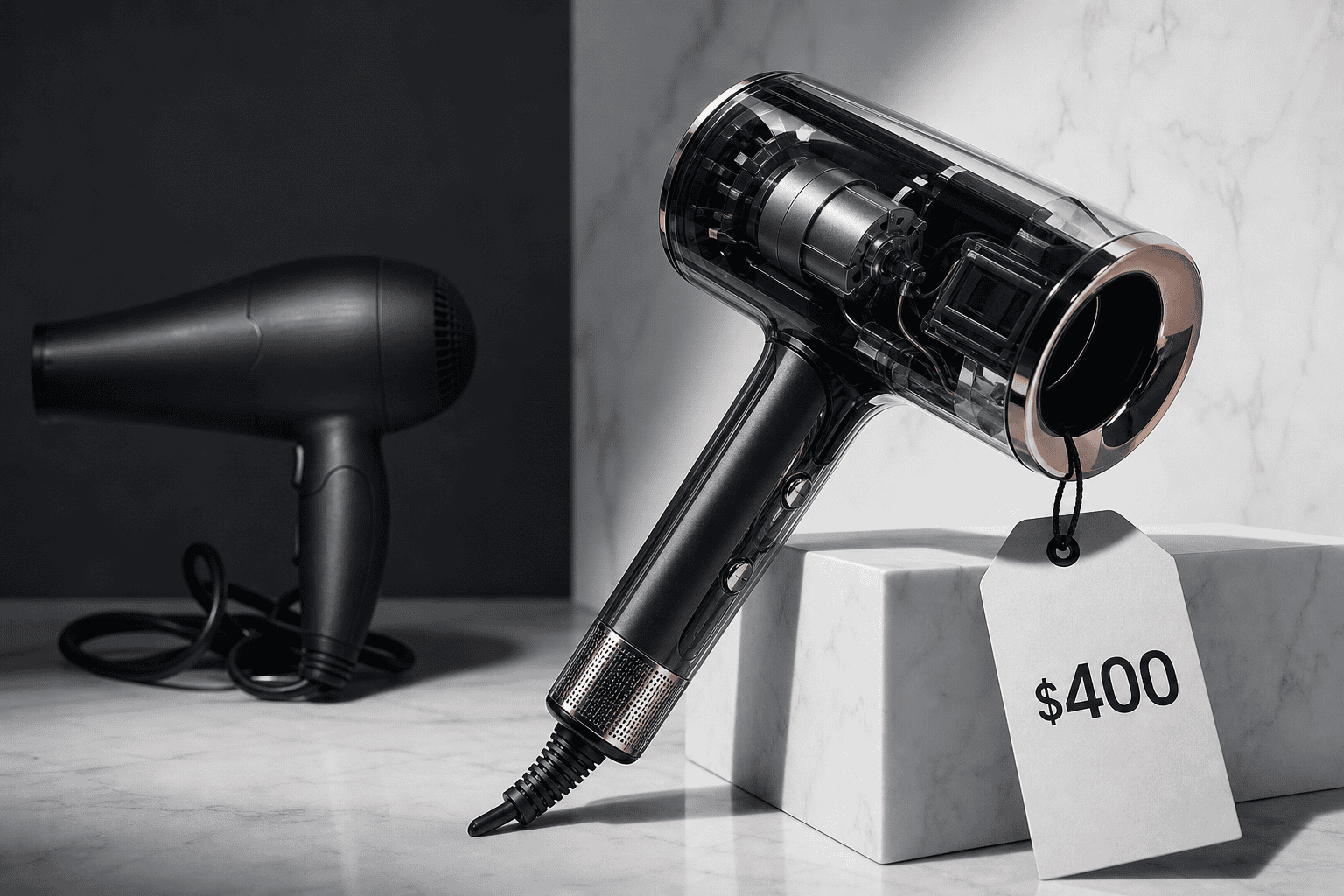
You’re Paying $400 For A Hair Dryer Built To Look Expensive
You’re paying around $400 for a hair dryer whose hardware costs a fraction of that to produce. That’s the real math behind the Dyson Supersonic — and it tells a revealing story about how one company convinced millions of people that a basic household appliance was worth ten times more than everything else on the shelf.
The launch that shouldn’t have worked
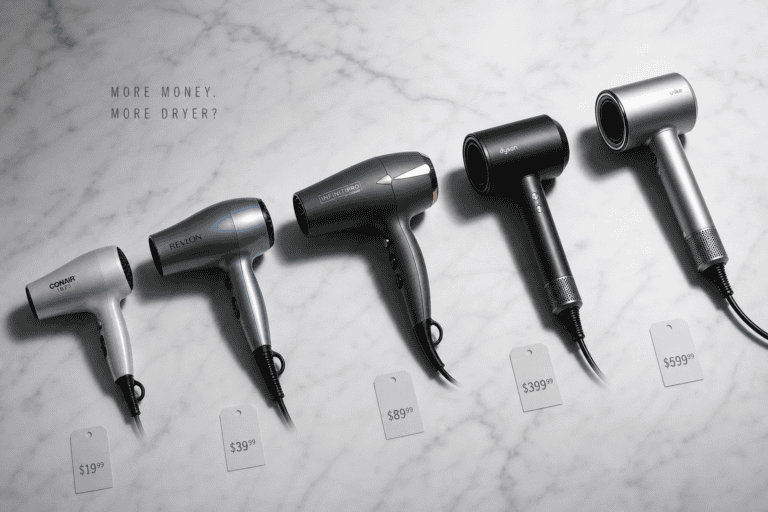
When Dyson launched the Supersonic in 2016, a decent hair dryer cost $30 to $80. Dyson priced theirs at $400.
It sold roughly 600,000 units in the first year — triple the company’s own projections — and pulled in over $500 million in revenue. By 2017 it was the best-selling hair dryer in the UK.
The engineering is genuinely real
Credit where it’s due. Dyson put around $71 million into development across four years, built roughly 600 prototypes, tested on a reported thousand miles of human hair, and filed around 100 patent applications.
The core move was taking a compact high-speed motor originally designed for vacuum cleaners and relocating it into the handle rather than the head. That shifts the centre of gravity, makes the dryer lighter in the hand, and allows more precise styling. That’s clever work, and it’s the reason the Supersonic doesn’t feel like other dryers.
The part that isn’t in the ads
Bulk-order pricing from Chinese contract manufacturers for comparable Dyson-tier dryers runs roughly ¥300–400 per unit — about $61. Retail sits between $400 and $600.
Dyson would argue that gap funds real research, and they’re not entirely wrong. The company reportedly spends around £8 million per week on R&D, filed 238 new patents in 2024 alone, and spends several million dollars a year on patent litigation. All of that is real cost.
It’s also true that James Dyson is worth roughly $18 billion and holds the title of richest person in England. The margins here are not modest.
The actual genius was positioning, not engineering
Dyson did to hair dryers what Apple did to phones: took a commodity nobody thought twice about and turned it into a status object.
New models debuted at New York Fashion Week. Award-winning stylists were brought in as partners. The unboxing was engineered to feel like opening a luxury item rather than an appliance.
It worked so completely that it created an entirely new market tier. The global hair dryer industry now sits near $12 billion, with projections pushing toward $21 billion by 2035.
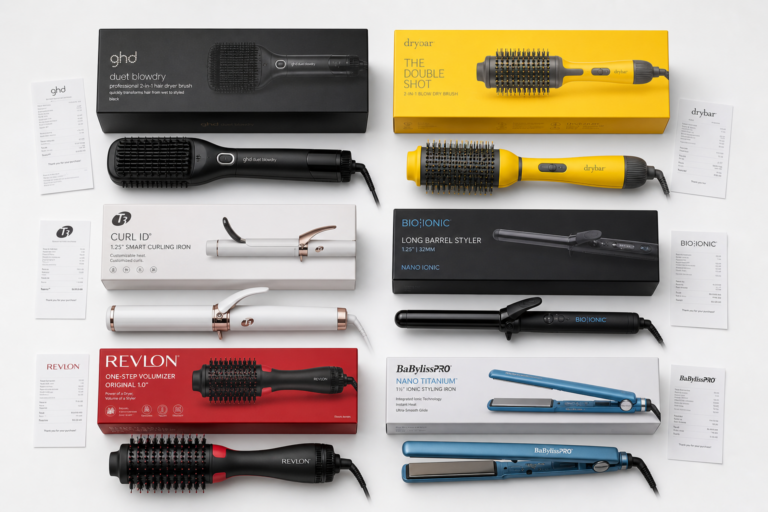
It’s a playbook that runs across the whole category — the same logic that lets one parent company sell functionally similar tools at three different price points, which we traced in These 6 Hair Tool Brands Are All The Same Company.
But the landscape has shifted
Competitors caught up fast. Shark now sells the SpeedStyle and FlexStyle between $179 and $299 — roughly half the Dyson price. In independent testing the Shark SpeedStyle landed third, directly behind both Dyson models, while costing dramatically less.
Hairstylist Laura Collins put it plainly: the Dyson was worth it for her as a working professional, but she can’t honestly say the price makes sense for the average person drying their hair at home.
The data supports that. Analysis consistently shows diminishing returns above the $200–$300 range. Beyond that threshold, extra features deliver minimal performance gain for most home users. You’re paying for the brand, the design, and the feeling of owning something premium.
L’Oréal’s AirLight Pro even uses infrared light technology that reportedly saves 31% more power than competing models — a sign the innovation race has moved beyond Dyson’s original playbook.
So is it a bad product?
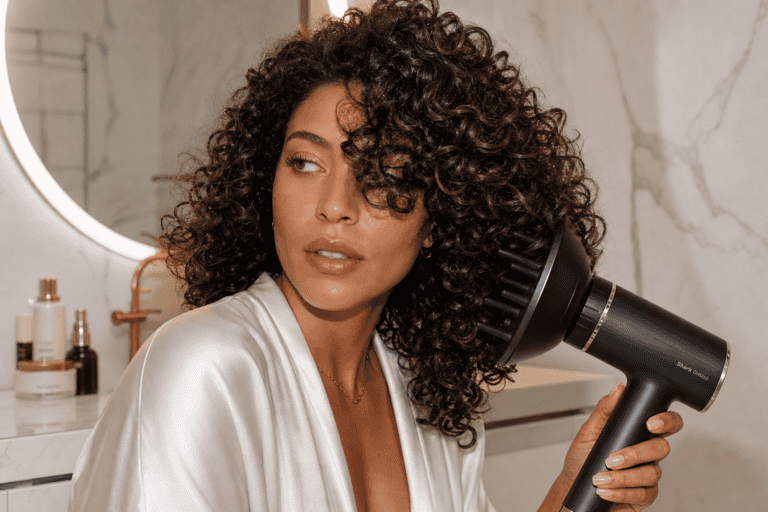
No. It dries hair faster, reduces heat damage, and professionals genuinely rate it — it’s still our top pick in 5 Hair Dryers Worth The Money For Thick, Curly Hair. But a $200 Shark handles roughly 90% of the same job.
At $400 you’re buying a modest amount of hardware, a share of legitimate R&D costs, and a very large portion of brand psychology. Dyson solved a problem most people didn’t know they had, then convinced them the solution was worth ten times the going rate.
Whether that’s brilliant innovation or brilliant marketing depends on how you look at it. Either way, you now know what you’re paying for.
Related reading
- The 5 Levels Of Hair Dryers (And Where The Price Stops Mattering) — where the returns actually flatten out
- 5 Hair Dryers Worth The Money For Thick, Curly Hair
- These 6 Hair Tool Brands Are All The Same Company — the good/better/best pricing ladder, explained
- 5 Hair Tool Brands Actually Worth Your Money
Sources
- Dyson published R&D disclosures — development spend, prototype count, patent filings, testing programme
- Reported first-year sales and revenue figures for the Supersonic launch (2016–2017)
- B2B contract manufacturing price listings for comparable high-speed dryers
- Independent comparative dryer testing placing Shark SpeedStyle relative to Dyson models
- Professional stylist commentary (Laura Collins)
- Global hair dryer market size and forecast reporting
- L’Oréal AirLight Pro published specifications
Manufacturing cost estimates are drawn from third-party bulk supplier pricing for comparable units, not from Dyson. They are indicative, not audited figures.